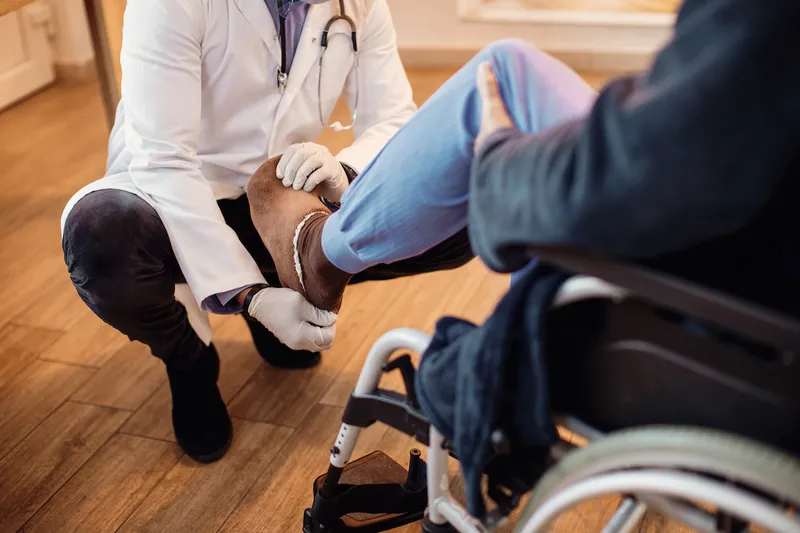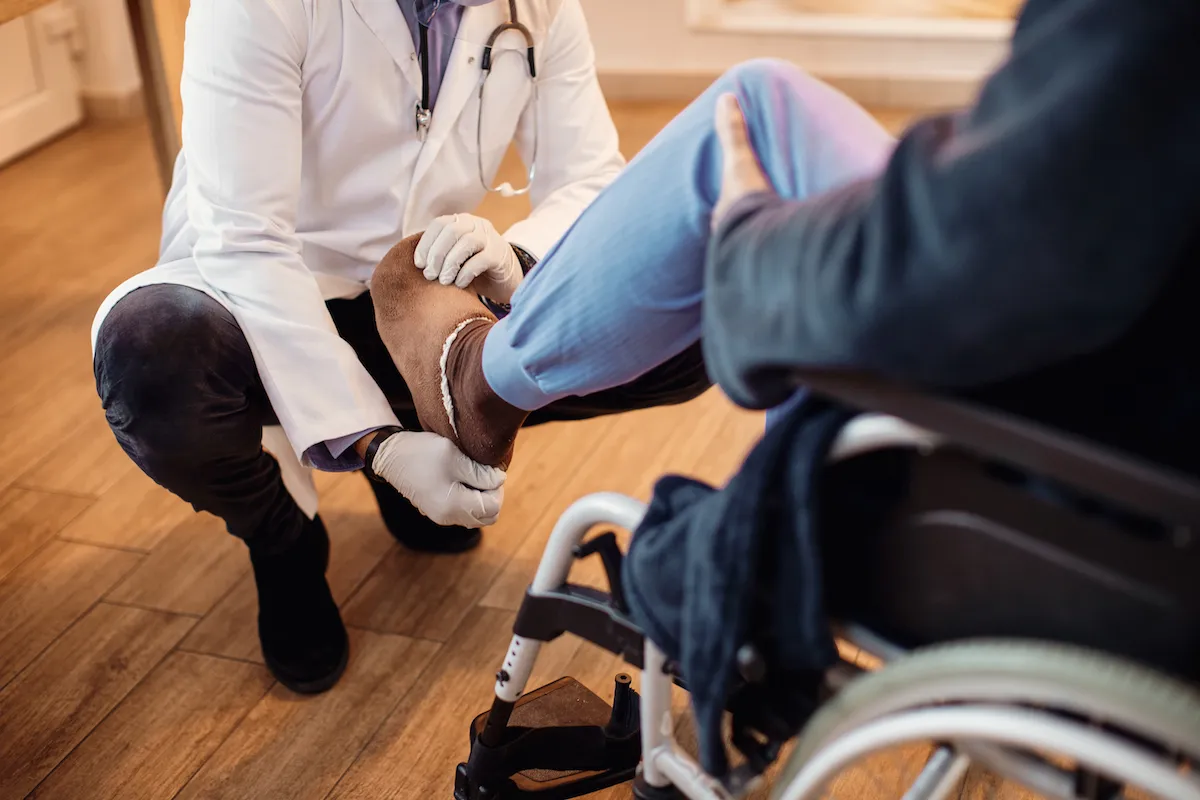
A sore on your foot or leg that is not healing after a couple of weeks can be a sign that blood is not reaching it well. Poor circulation from blocked arteries is a major reason wounds stall, especially for people with diabetes. Getting checked early can protect your leg.
First Coast Cardiovascular Institute runs an Amputation Prevention Center where cardiologists and wound care specialists work together. Its message is simple: amputation is not your only option.
Types of wounds the team sees
- Diabetic foot ulcers
- Arterial ulcers from poor blood flow
- Venous ulcers from vein problems
- Pressure ulcers
- Traumatic and surgical wounds
- Other non-healing wounds of the legs and feet
How the team works
FCCI's wound care specialists and board-certified cardiologists work under one roof. The team uses testing to look for arterial blockages. When one is found, a cardiologist builds a personal treatment plan aimed at relieving pain, shortening recovery and healing the wound.
FCCI has its own outpatient cath labs, including the one in Palatka, which lets many patients get artery treatment without a hospital stay.
Treatment options
- Vascular testing to find blockages
- Early endovascular treatment to restore blood flow
- Hyperbaric oxygen treatment
- Skin grafts
- Amniotic membrane therapies
- Preventive surgery when needed
Restoring blood flow to the legs is often key for healing wounds and easing pain with walking, cramping, swelling or color changes.
A local leader in limb saving
Dr. Yazan Khatib, FCCI's president, co-founded the Save a Leg, Save a Life Foundation, which works with medical professionals, caregivers and patients to prevent amputations in people with diabetes and PAD. FCCI was also the first in Northeast Florida, in 2008, to perform pedal access, a technique for treating severe leg blockages through the foot.
What you can do today
- Check your feet every day, especially if you have diabetes
- Do not ignore a sore, blister or color change
- Ask your doctor if a vascular check makes sense
- Call 386.325.2836 to be seen at the Palatka office
Spreading redness, fever, or a foot that turns cold, pale or black is urgent. Seek emergency care or call 911.
Questions to ask at your visit
For a foot wound that will not heal, ask:
- Is poor blood flow slowing my wound?
- Which test checks my leg arteries?
- Can blood flow be restored without surgery?
- Who will care for the wound itself?
- How often should I be seen?
Care close to home in Palatka
Local providers know how common slow-healing foot wounds are here. Cecilia Pitts, APRN, nursed at Putnam Community Medical Center, and Kortney Winkleman, APRN, grew up in Putnam County. Both see patients at the Palatka office.
A wound that is getting worse fast, with spreading redness or fever, needs urgent care, not a weekday appointment. For a slow sore that will not close, call the front desk Monday through Friday, 8 a.m. to 5 p.m.
Why patients choose FCCI
Wound care often means frequent check-ins. Being able to get circulation tests and treatment in Palatka makes those repeat visits easier on you and on whoever drives you.
Circulation testing and treatment are covered by many plans FCCI accepts, including Medicare, Medicaid of Florida, Blue Cross Blue Shield, Aetna, Cigna, Humana, United Healthcare and Tricare. Ask the front desk about self-pay if needed.
Have a foot sore that has lingered for weeks? Call 386.325.2836, weekdays 8 a.m. to 5 p.m., or request a visit online, keeping wound details for the phone call.